Agents propose. Hooks block. Git decides.
The engineering guide to bringing Claude Code, MCP and subagents into your daily Terraform, Kubernetes, AWS and CI/CD work, with the safeguards a production environment demands.
One-time payment. 1 year of updates. 14-day guarantee.
The explorer shows a sample of what ends up in your repository. There are 52 templates (subagents, hooks, rules, skills and CLAUDE.md), each one explained in the chapter where it is built.
- .claude/
- agents/
- hooks/
- rules/
- skills/
One system, in the order it runs in production
Installing Claude Code takes five minutes. What the guide teaches is the chain that keeps an agent from doing damage: each step delivers something the next one uses.
Illustrative example: a nodepool change moving through all six steps. Click a step or run the whole thing.
This guide has a changelog
Claude Code, MCP and the providers change every month. A static PDF is outdated the day it ships. Here every change is published with its date, section and what was added, and your access includes all of them for a year.
Last updated: 08/12/2026
-
Container security with a gated executor (section 10.9)
Four ADRs on auditor autonomy, a fail-closed PreToolUse hook and CVE triage memory: a CVE already analyzed does not come back on every scan.
-
Spec-driven FinOps with a gated reaper (section 11.5)
"Delete immediately" for zombie resources becomes a snapshot and a PR with a 7-day grace period. A hook blocks direct deletes.
-
Spec-driven CI/CD: ADRs, deployer and rules (section 8.15)
A deployer that verifies the Cosign signature, bumps the GitOps repository and never touches the cluster.
-
AWS with executable guardrails (section 6.6)
Delete, Terminate and Revoke actions never leave the agent: they become a ready command for a human to run.
Written for the people accountable for the environment
The guide assumes you already run something that can't go down. The question isn't whether AI can write Terraform. It's what you let it execute, and behind which safeguard.
It's not for anyone looking for NoOps. The guide argues for human-in-the-loop, governance and technical accountability. If the plan is to let an agent apply straight to production, this material will disagree with you the whole way.
DevOps, SRE and Platform Engineers
Who already maintain Terraform, Kubernetes and pipelines and want speed without giving up review and rollback.
Tech leads and Staff engineers bringing AI to their team
And who need ADRs, rules and permissions to show leadership there is control, not just enthusiasm.
People moving into DevOps
The chapters explain why each safeguard exists, not just the command. That cuts years of trial and error.
16 chapters, 176 sections, 300+ pages
Three chapters are open right now. Read before you buy.
From readers
"Finally the first AI guide focused on DevOps that covers what matters. No fluff."
"I didn't know several of the tools mentioned... MCP, RAG, all together. Now I never leave the IDE."
"Highly technical and conceptual at the same time. It gave me the foundation to discuss strategy with leadership."
"Even with little experience, I closed the gap with other professionals and was able to apply many of the concepts."
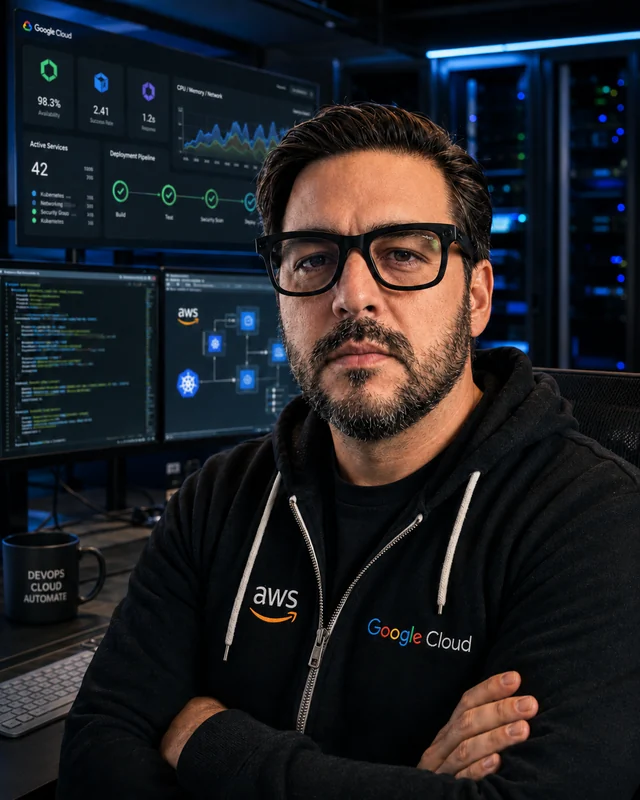
Who wrote it
Filipe Motta. Senior DevOps, Cloud and Platform Engineer since 2015.
This guide was written from real problems: incidents, automation that failed and hard decisions in critical production, cloud, Kubernetes and automation at scale. Every safeguard in it exists because, at some point, someone needed it.
Everything on this page, for a year
- 16 interactive chapters, 300+ pages
- 52 ready-made templates: subagents, hooks, rules, skills and CLAUDE.md
- Every update published in the changelog for 12 months
- AWS examples, with concepts that apply to GCP, Azure and on-prem
From $97 to
$57
One-time payment, no automatic renewal.
Buy the guide14-day guarantee. Read it and it wasn't for you? Ask for a full refund, no form and no explanation.
Frequently asked questions
Does it work for Azure and GCP, or only AWS?
Is it practical or just theory?
Does the guide keep up with changes in AI tools?
How long do I have access?
Can I read part of it first?
I'm new to DevOps. Can I keep up?
Start with the free chapter. Come back when you want the safeguards.
Have a question first? Message me on WhatsApp.